The Waldheim Affäre: Unveiling a Nation's Past and Its Global Reverberations
The Waldheim Affäre stands as a potent reminder of how deeply historical truths can impact contemporary politics and national identity. What began as a presidential election campaign in Austria in the mid-1980s quickly escalated into an international scandal that challenged a nation's collective memory and forced a global reckoning with the legacies of World War II. At its heart was Kurt Waldheim, a man whose illustrious career as UN Secretary-General and subsequent bid for the Austrian presidency was shadowed by allegations concerning his service in the German Wehrmacht and his alleged involvement in war crimes during WWII.
This Exploring the Waldheim Affäre: A Historical Review delves into the complexities of this pivotal historical event, examining the accusations, the international backlash, and the profound, long-lasting implications for Austria's self-perception and its role on the global stage. The Waldheim Affäre was more than just a political controversy; it was a crisis of conscience that pushed Austria, and indeed the world, to confront uncomfortable truths about wartime complicity and the selective nature of historical remembrance.
Kurt Waldheim: From Diplomat to Defendant
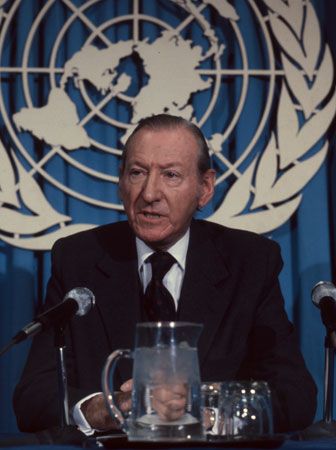
Kurt Waldheim’s public life before the scandal was one of undeniable distinction. Born in 1918, he embarked on a successful diplomatic career after World War II, serving as Austria's Ambassador to the United Nations, Foreign Minister, and most notably, as the fourth Secretary-General of the United Nations from 1972 to 1981. During his tenure at the UN, he was a highly respected figure, navigating complex geopolitical issues and mediating international conflicts. His memoir, In the Eye of the Storm, published in 1985, painted a picture of a man dedicated to peace and international cooperation.
However, it was his 1986 campaign for the Austrian presidency that brought his meticulously crafted narrative crashing down. The World Jewish Congress (WJC) launched an investigation, revealing significant discrepancies between Waldheim's autobiographical accounts and his actual wartime service. While Waldheim had acknowledged serving in the German Wehrmacht, he had consistently downplayed his role, claiming to have been wounded early in the war and spending the rest of it studying law. The WJC's findings, spearheaded by individuals like Eli Rosenbaum and the meticulous research of historian Robert Herzstein, exposed a far more active and disturbing past.
Key revelations included:
- His service as an intelligence officer in Army Group E in the Balkans between 1942 and 1945. This unit was notorious for brutal anti-partisan operations and reprisals against civilian populations in Yugoslavia and Greece.
- His presence during events linked to war crimes, including the deportation of Greek Jews from Salonika and the massacres of Yugoslav partisans.
- Allegations that he had been decorated for his service and had been aware of, if not complicit in, atrocities committed by his unit.
- The deliberate omission of these crucial years from his autobiographies and official biographies, suggesting a concerted effort to conceal his past.
These revelations transformed the presidential race into a global media spectacle, forcing a deeper examination of the man aspiring to lead a nation still grappling with its wartime history.
The Global Backlash and Austria's Identity Crisis
The allegations surrounding Waldheim's past triggered an immediate and furious international reaction. The World Jewish Congress became a leading voice in exposing and condemning Waldheim's actions and obfuscations. Major powers, including the United States, expressed grave concern. In 1987, the U.S. Justice Department placed Waldheim on its "watch list" of individuals barred from entering the country, citing his role in the deportation and execution of innocent civilians. Israel also reacted strongly, diminishing diplomatic ties with Austria.
For Austria, the Waldheim Affäre was nothing short of an existential crisis. For decades after WWII, Austria had cultivated the image of itself as "the first victim" of Nazi aggression, downplaying its own enthusiastic participation in the Third Reich. Waldheim's case shattered this comfortable narrative, forcing a painful re-evaluation of national identity and historical responsibility. The controversy laid bare deep divisions within Austrian society:
- Denial and Defiance: Many Austrians, particularly on the nationalist right, rallied around Waldheim, viewing the international criticism as an attack on Austria itself. The slogan "We Austrians elect whom we want!" became a defiant cry.
- Shame and Self-Reflection: A significant portion of the population, however, felt profound shame and recognized the necessity of confronting the nation's complicity. This group championed honest historical inquiry and accountability.
Despite the international outcry, Waldheim was elected President in June 1986. His presidency was largely isolated on the world stage, and he made very few state visits abroad. This period highlighted the immense pressure on Austria to finally Waldheim Affäre: Unpacking Austria's Controversial Past and address its historical amnesia.
Lessons Learned: The Enduring Legacy of the Waldheim Affäre
While Kurt Waldheim completed his presidential term in 1992, the repercussions of the Waldheim Affäre extended far beyond his political career. Its legacy is multifaceted, offering crucial lessons for historical accountability, national identity, and international relations:
The Power of Historical Inquiry and Public Memory
The scandal underscored the critical importance of rigorous historical research and independent journalism in uncovering truth, even decades after the fact. It demonstrated that attempts to suppress or rewrite history often fail under scrutiny, especially in an interconnected world.
Confronting National Complicity
The Waldheim Affäre was a turning point for Austria. It forced the nation to move away from the "victim" narrative and acknowledge its role as both victim and perpetrator during the Nazi era. This painful reckoning paved the way for more honest historical education, reparations, and engagement with its Jewish community. It inspired a generation of historians and public figures to delve deeper into Austria's past, leading to a more nuanced and accurate understanding of its wartime history.
Accountability in Public Life
The affair sent a clear message that individuals seeking high office, especially those involved in international diplomacy, must be transparent about their past. It highlighted the moral imperative for leaders to embody integrity, particularly concerning sensitive historical periods.
The Role of International Organizations
The involvement of the World Jewish Congress and other international bodies demonstrated the vital role that non-governmental organizations and global institutions play in upholding human rights and ensuring historical justice. Their persistent efforts ensured that Waldheim's past could not remain buried.
Practical Insights for Contemporary Societies
The Waldheim Affäre offers valuable insights for societies still grappling with difficult historical chapters:
- Encourage Open Dialogue: Foster environments where challenging historical narratives can be openly discussed, debated, and researched without fear of political backlash.
- Support Independent Research: Invest in and protect independent historical commissions and investigative journalism that seek to uncover the full truth of past events.
- Educate Future Generations: Develop comprehensive educational curricula that teach the complexities of national history, including uncomfortable truths, to prevent future generations from repeating past mistakes or falling prey to revisionism.
- Acknowledge and Apologize: For nations facing a legacy of complicity, genuine acknowledgement and, where appropriate, apologies and reparations are crucial steps towards healing and reconciliation.
Conclusion
The Waldheim Affäre was more than a scandal; it was a profound historical earthquake that reshaped Austria's self-perception and sent ripples across the international community. It served as a stark reminder that history is not easily erased or rewritten, and that the past, especially one marked by atrocities, has an uncanny way of resurfacing to demand accountability. Its legacy is a testament to the enduring power of truth, the imperative of historical memory, and the continuous struggle for transparency and justice in public life. The affair ultimately contributed to a necessary and overdue process of confronting difficult national histories, ensuring that the shadows of the past can, in time, lead to a brighter, more honest future.