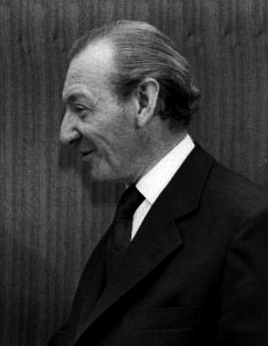
Waldheim Affäre: Unpacking Austria's Controversial Past
The Waldheim Affäre stands as a pivotal and deeply unsettling chapter in Austria's post-World War II history. More than just a political scandal, it was a profound national reckoning, forcing a nation to confront its complex wartime past and the often-uncomfortable truths embedded within its collective memory. What began as a presidential election campaign in 1986 swiftly escalated into an international diplomatic crisis, unraveling the carefully constructed image of a respected global statesman and exposing the lingering shadows of Nazi Germany's influence.
At its core, the Waldheim Affäre centered on Kurt Waldheim, a man who had served as Austria's Foreign Minister and, notably, as the Secretary-General of the United Nations for a decade, before seeking the Austrian presidency. The controversy ignited when startling revelations emerged about his service in the Wehrmacht during World War II, specifically his alleged involvement in or knowledge of atrocities in the Balkans and his subsequent decades-long concealment of these facts. This wasn't merely a personal failing; it became a crucible through which Austria's identity and its relationship with its own history were painfully re-evaluated.
The Man at the Center: Kurt Waldheim's Distinguished Career and Ambitions
Before 1986, Kurt Waldheim was an internationally acclaimed figure. Born in St. Andrä-Wördern, Austria, in 1918, his career path seemed to embody the triumph of diplomacy and international cooperation. Following legal studies and wartime service, he entered the Austrian diplomatic corps in 1945, embarking on a steady ascent that saw him serve in various ambassadorial roles. His political trajectory led him to become Austria's Foreign Minister in 1968, a position he held until 1970.
However, it was his tenure as Secretary-General of the United Nations from 1972 to 1981 that cemented his global reputation. During this period, Waldheim navigated complex geopolitical landscapes, mediating conflicts, and advocating for peace on the world stage. He was widely perceived as a diligent, pragmatic, and highly respected diplomat, a symbol of a neutral, post-war Austria committed to international harmony. This carefully curated image, built over decades, made the subsequent revelations all the more shocking. Upon completing his two terms at the UN, Waldheim returned to Austrian politics, setting his sights on the nation's highest office: the Federal Presidency, a move that would ultimately trigger the seismic shifts of the Waldheim Affäre.
Unveiling the Past: The Genesis of the Scandal
The initial tremors of the Waldheim Affäre began during his 1986 presidential campaign. What started as relatively minor inquiries into his autobiography, which omitted significant portions of his wartime service, quickly escalated into a full-blown international investigation. The catalyst for this dramatic turn was the World Jewish Congress (WJC), which, armed with meticulous research, began to expose discrepancies and outright omissions in Waldheim's account of his wartime activities.
The core of the allegations focused on Waldheim's service as an officer in the German Wehrmacht's Army Group E, deployed in the Balkans between 1942 and 1945. While Waldheim consistently maintained he was merely a "medical orderly" or engaged in non-combat roles, documents unearthed by the WJC and other researchers suggested a much deeper and more problematic involvement. Specifically, Waldheim's intelligence unit was implicated in actions against partisans, including brutal reprisals, deportations of Jewish civilians from Greece, and involvement in interrogation activities during a period when horrific war crimes were being committed in the region. Critics argued that even if not directly involved in perpetrating atrocities, his position would have granted him direct knowledge of these events, which he then deliberately concealed or downplayed for decades, presenting a sanitized version of his past.
The revelation that a former UN Secretary-General and presidential candidate had potentially served in a unit associated with war crimes, and had subsequently obscured this history, sent shockwaves across the globe. It raised fundamental questions about accountability, historical truth, and the persistent shadows of World War II, propelling the Waldheim Affäre onto the front pages of international newspapers.
The Global Fallout: International Reactions and Diplomatic Crisis
The revelations surrounding the Waldheim Affäre triggered an unprecedented international outcry. Jewish organizations, particularly the World Jewish Congress, spearheaded the campaign to expose Waldheim's past, presenting compelling evidence that directly contradicted his narrative. This led to widespread condemnation from numerous governments and international bodies. The controversy rapidly evolved from a domestic political battle into a full-scale diplomatic crisis, profoundly impacting Austria's standing on the global stage.
The most significant international reaction came from the United States, which, in 1987, placed Kurt Waldheim on its "Watch List," effectively barring him from entering the country as a private citizen. This decision, based on the findings of the U.S. Justice Department's investigation into his alleged complicity in war crimes, was an unprecedented move against a sitting head of state of a friendly nation. Other countries followed suit, and Waldheim's presidency became characterized by diplomatic isolation, with many international leaders refusing to meet with him.
Austria, a nation that had successfully cultivated an image as "the first victim" of Nazi aggression, suddenly found itself accused of harboring historical revisionism and electing a president with a tainted past. The international pressure was immense, compelling a closer look at Austria's collective memory and its often-reluctant engagement with its own role in the Holocaust and World War II. For a deeper dive into the historical nuances, consider Exploring the Waldheim Affäre: A Historical Review.
Austria's Reckoning: Domestic Impact and Long-Term Legacy
Domestically, the Waldheim Affäre deeply polarized Austrian society. While international condemnation mounted, a significant portion of the Austrian electorate rallied around Waldheim, viewing the foreign criticism as an unjust attack on their nation. In a defiant act, Waldheim was elected president in June 1986, reflecting a complex mix of patriotism, anti-Semitism in some quarters, and a desire to resist external pressure. His supporters argued that he was being unfairly persecuted and that the focus on his past overshadowed his contributions as a diplomat.
However, for a substantial and growing segment of the population, particularly younger generations and intellectuals, the scandal was a wake-up call. It forced Austria to confront uncomfortable truths about its wartime complicity, challenging the long-held narrative of being solely a victim of Nazi Germany. This period marked a significant shift in Austria's historical self-perception, initiating a slow but crucial process of acknowledging its co-perpetrator role in the Holocaust and its direct involvement in the war machine.
One of the lasting outcomes was the establishment of an International Commission of Historians in 1987, tasked with independently investigating Waldheim's wartime past. While the commission found no evidence of his personal involvement in war crimes, it confirmed his presence in units that committed atrocities and his deliberate concealment of his activities. This report, though contested by Waldheim, played a crucial role in shaping the ongoing historical debate.
The Waldheim Affäre ultimately served as a catalyst for a more open and critical examination of Austria's past, paving the way for greater historical transparency and a more nuanced national identity. It underscored the vital importance of confronting difficult historical truths, not just for moral integrity but also for a nation's ability to engage honestly with the international community. To understand its enduring influence, delve into The Waldheim Affair: Understanding its Impact and Legacy. The practical tip here is clear: for any nation, the honest and thorough reconciliation with its historical record, especially concerning periods of conflict and injustice, is fundamental for fostering trust, both domestically and internationally. Suppressed histories inevitably resurface, often with more disruptive force, highlighting the necessity of proactive historical self-reflection and accountability.
In conclusion, the Waldheim Affäre transcended the personal fate of Kurt Waldheim to become a defining moment for modern Austria. It ripped open old wounds, exposed deep societal divisions, and forced a nation to embark on a difficult, yet ultimately necessary, journey of historical introspection. While painful, this reckoning laid the groundwork for a more honest engagement with Austria's role in World War II, serving as a powerful reminder that historical truth, however uncomfortable, is indispensable for a nation's moral compass and its place in the global community.